Jane.com · 2017
Jane.com Personalization
- Role
- Lead and sole designer, Discovery, iOS and Android
- Focus
- iOS, Android, Personalization
- Outcomes
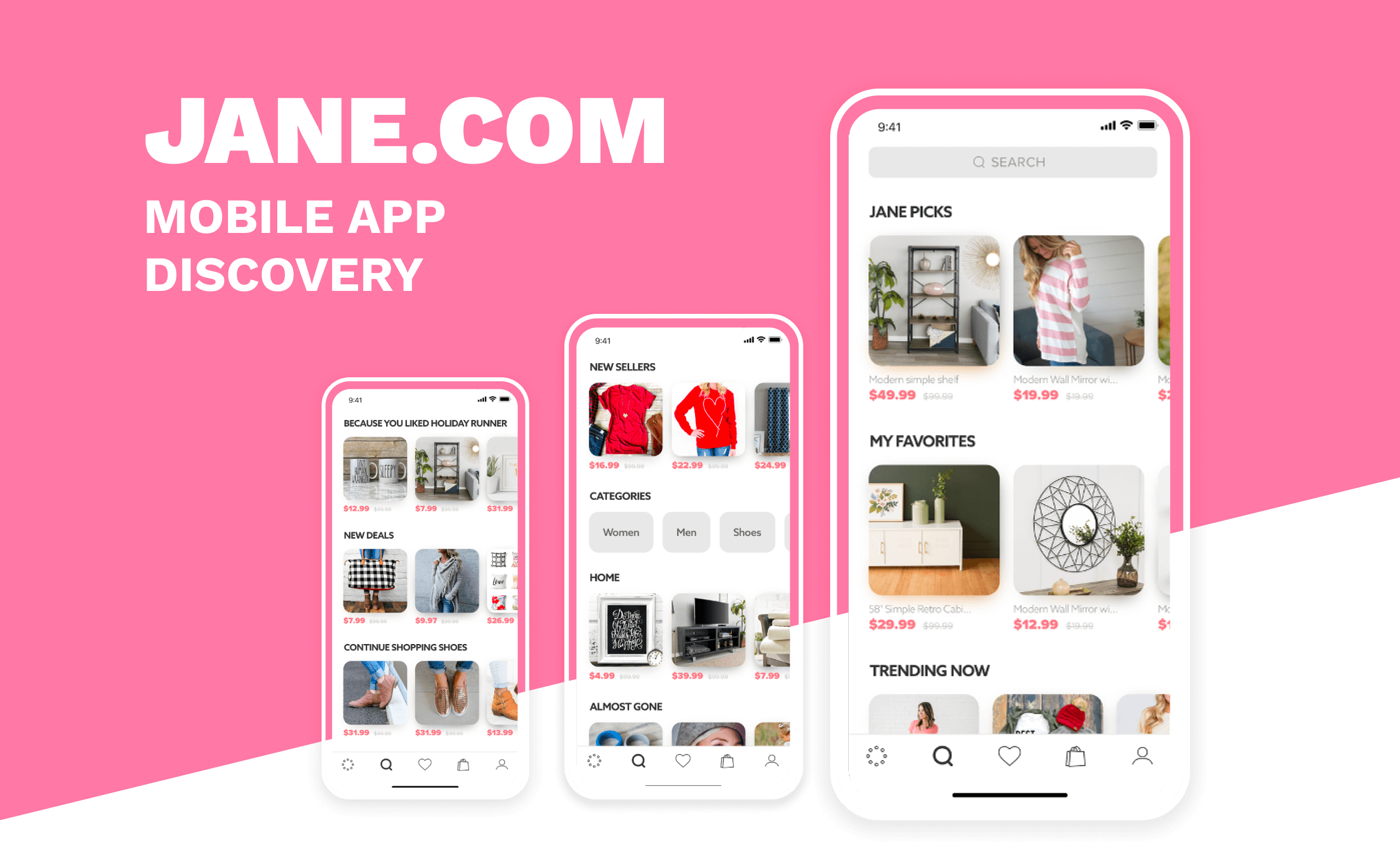
- Behavioral and contextual signals became a testable Discovery feed, modeled on patterns proven at Netflix and Spotify.
Challenge
The product's origin was a single feed to scroll through. As more sellers joined the platform, the number of products increased. Instead of scrolling through the entire feed, we wanted to test a personalized feed based on what you have shopped for and what you shop for on other sites.
Users provided lots of feedback on suggestions, and we wanted to create a playground to test these options.
Goal
Users had a lot of feedback on suggestions, and we wanted to create a playground to test these options.
Role
I was the lead and sole designer for the Discovery section of the iOS and Android app. I worked closely with a product manager, a data scientist, and a small team of developers.
Case study
What is personalization?
Behavioral - What they have done historically, and what they are doing now
Contextual - What we know about them, and what they tell us
What can we use?
Implicit - When the user does not know the feedback provided will be used in relevance
- How long a user spends on a deal detail
- Recently shopping for a lot of maternity, probably expecting
Explicit - When the user knows the feedback provided is interpreted as a relevance judgment
- When a user says in their profile that they don’t like the Baby category
- When a user likes an item. Problem!
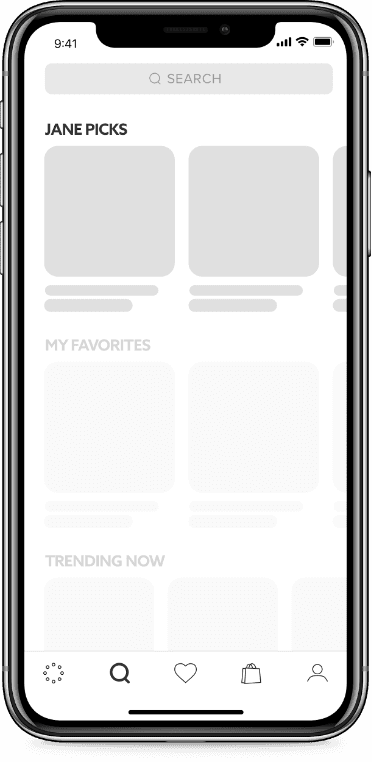
‘Explore’ tab
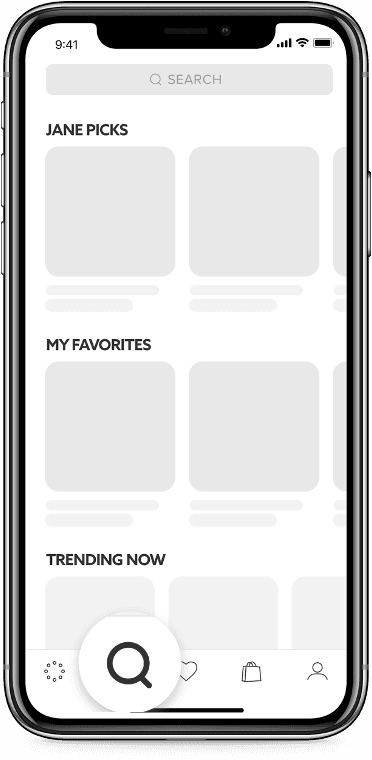
Jane wishlist
The current problem of mixed signals in the favorites and 'add to list' needs to be resolved.
Explicit feedback is needed, as well as an intuitive place for rebook notifications.
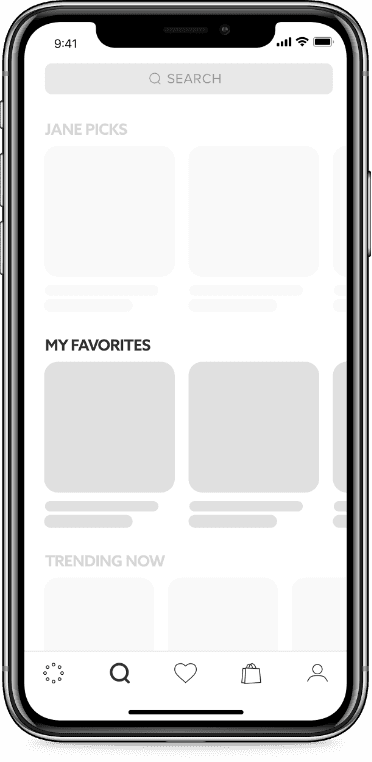
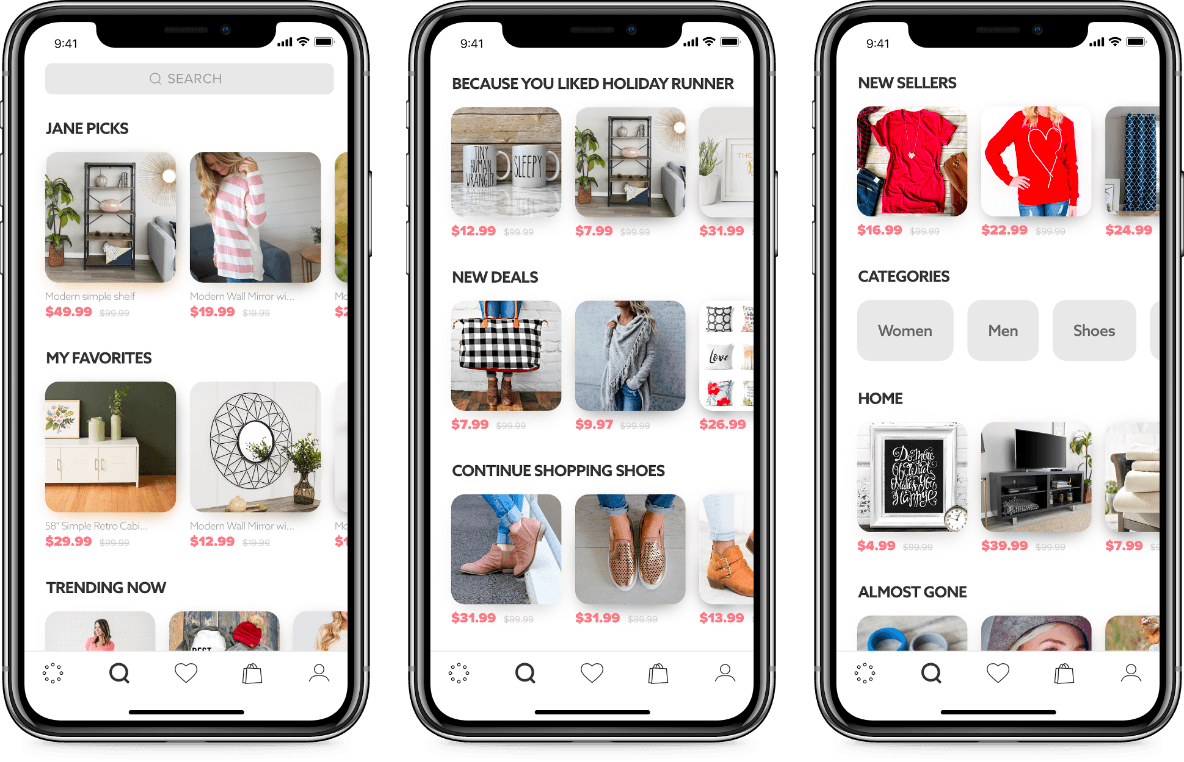
Jane picks
Jane wants to ensure that she can influence users to engage with specific marketing events and also control the brand by highlighting specific deals. This could also be a place to showcase new products that are launching for the first time.
Jane trending now
Jane has identified both long-term and short-term trends.
Jane's trends could include yearly product type trends (such as sweaters, swimsuits) and short-term fads based on recent sales and other forms of engagement.
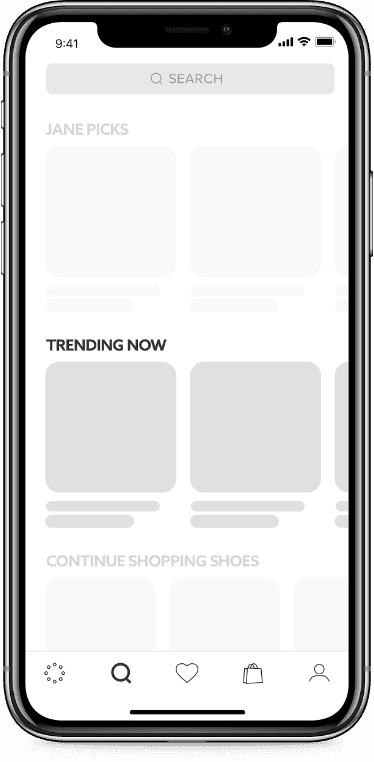
Jane continue shopping
Jane has found that customers align with specific categories over their lifetime, but we should investigate the continuity between shopping experiences.
Can we identify an estimate of whether the user intends to purchase, repurchase, or abandon a category?
This may not fit with our model since our inventory changes so frequently.
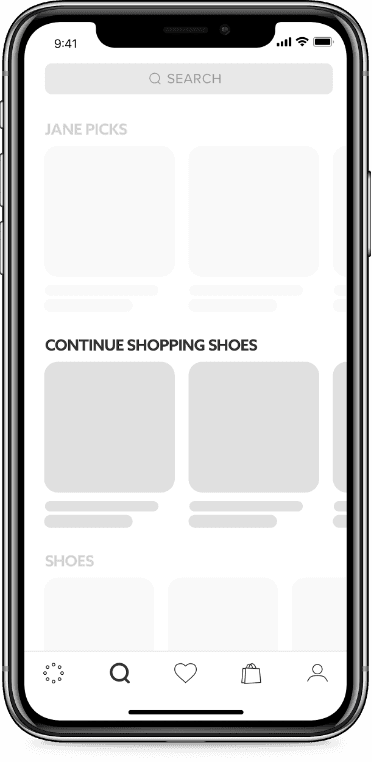
Jane because you liked
Jane currently has the ability to do deal-deal similarity on the product detail pages.
To add a row into the feed we would need to have feedback on at least one product. Row generation algorithm would take care of how many rows would be showed.
Could potentially be valuable at a tag, facet, or category level.
Because you liked Boho
Because you liked Midi dresses
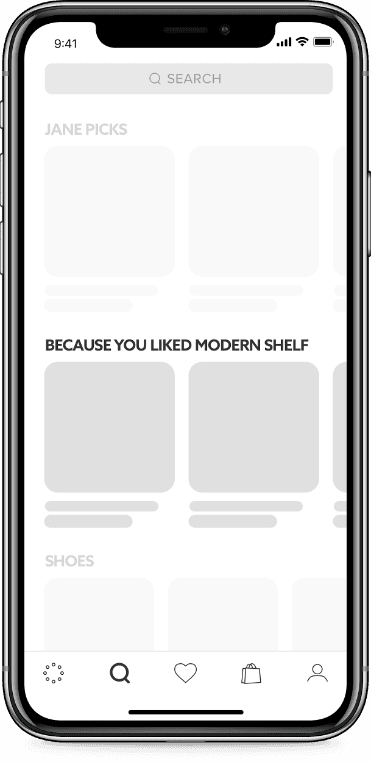
Jane new release
We could use this to surface products that are not rebooks.
Something similar to this could also be used to help show new sellers who are running their first couple deals.
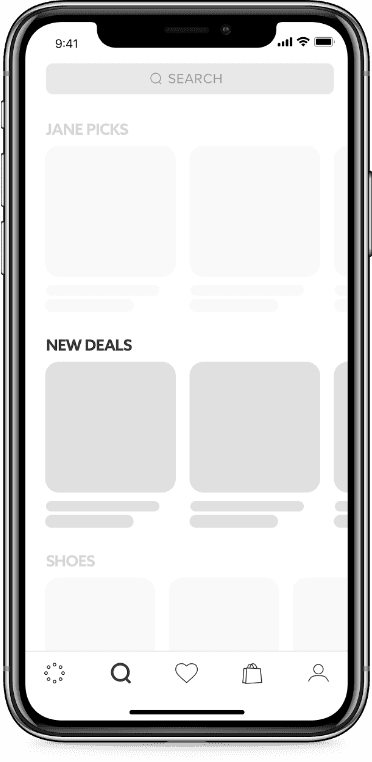
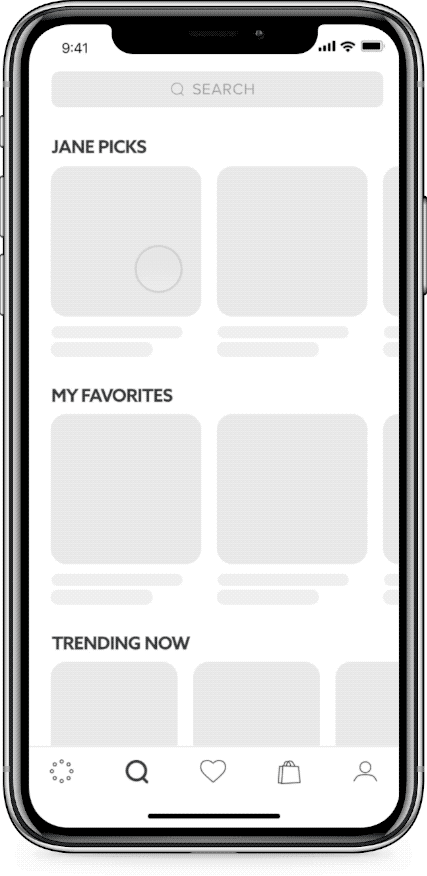
Example hi fidelity
Explicit feedback
Contextual personalization
What we know about them, and what they tell us:
AGE
- Birthday Gift
LOCATION
- Popular in your area
DEMOGRAPHICS
DEVICE TYPE
- Price Inflation
PROFILE
- Occupation
- Size
- Saved Search or Filter
Behavioral personalization
Category Affinity
Browsing History
Recommended for You
Abandonment emails (Search, Form, Cart)
Life Stage (Single, Expecting, Kids, Grandma)
Deal Recommendations
- Based on purchase history
- Based on browsing activity
- Based on things you’ve searched
- Outfit Builder or Frequently Bought Together
More screenshots, flows, and information available upon request.